Migration, Family History, and the Power of Storytelling
On Saturday, November 15th, we hosted our first Cultural Session for the 2025-26 program year! Cultural Sessions are field trips around the Twin Cities which offer our youth the opportunity to learn about our cities’ rich histories and make connections with local community leaders. Our first session centered around the themes of migration, family history, and the power of storytelling.
The Rondo Neighborhood
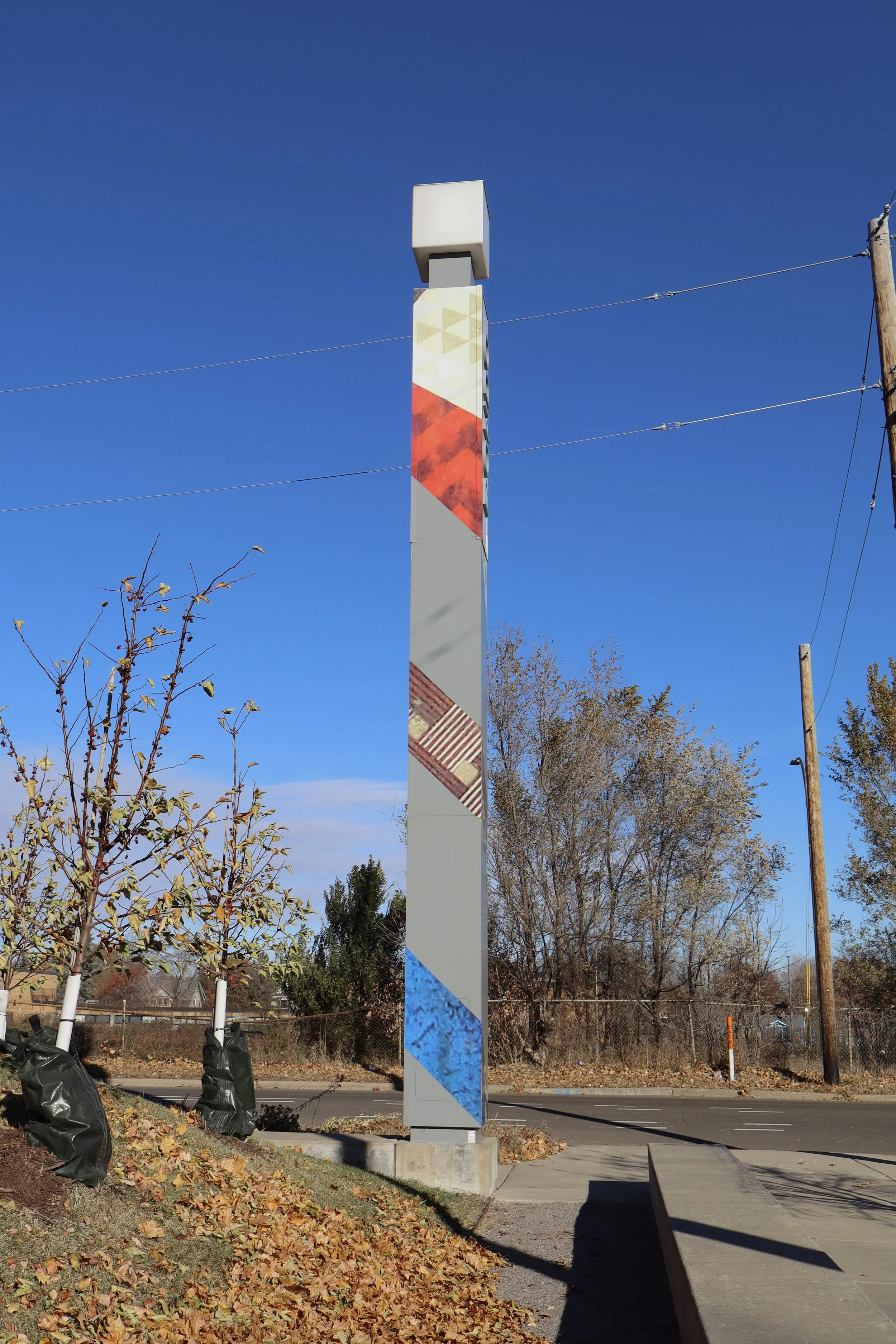
Monument at Rondo Commemorative Plaza
We started our journey at Rondo Commemorative Plaza, halfway between Lexington and Dale off of I-94. There, we were met by our wonderful friend and colleague Damon, who engaged us in discussions about the history of the Rondo neighborhood.
The Rondo neighborhood, like many other areas across the United States, has a complex history of colonization, migration, and displacement. From the very beginning, this land has been inhabited by the Dakota and Ojibwe people, the former of whom gave Minnesota its original name—Mni Sota Makoce. During the colonial period, European settlers moved in, many hoping to extract resources from the local land and wildlife: it’s from one of these settlers, Joseph Rondo, that the neighborhood gets its name.
As the years went on, the neighborhood became home to several immigrant communities, such as Irish Catholics, Eastern European Jewish people, and Black Americans from the recently-emancipated South. The movement of Black Americans into the Rondo neighborhood was part of the larger Great Migration, which saw millions of people fleeing segregation and untenable treatment in the South.
Despite migrating northward in the hopes of finding fairer treatment, Black Americans in Rondo continued to face structural forms of racist violence: redlining—the practice of demarcating certain neighborhoods as either “desirable” or “undesirable” for investment—laid the groundwork for the Interstate 94 highway to be built directly through it. The construction of I-94 displaced more than 600 Black families, and destroyed many businesses and other institutions.
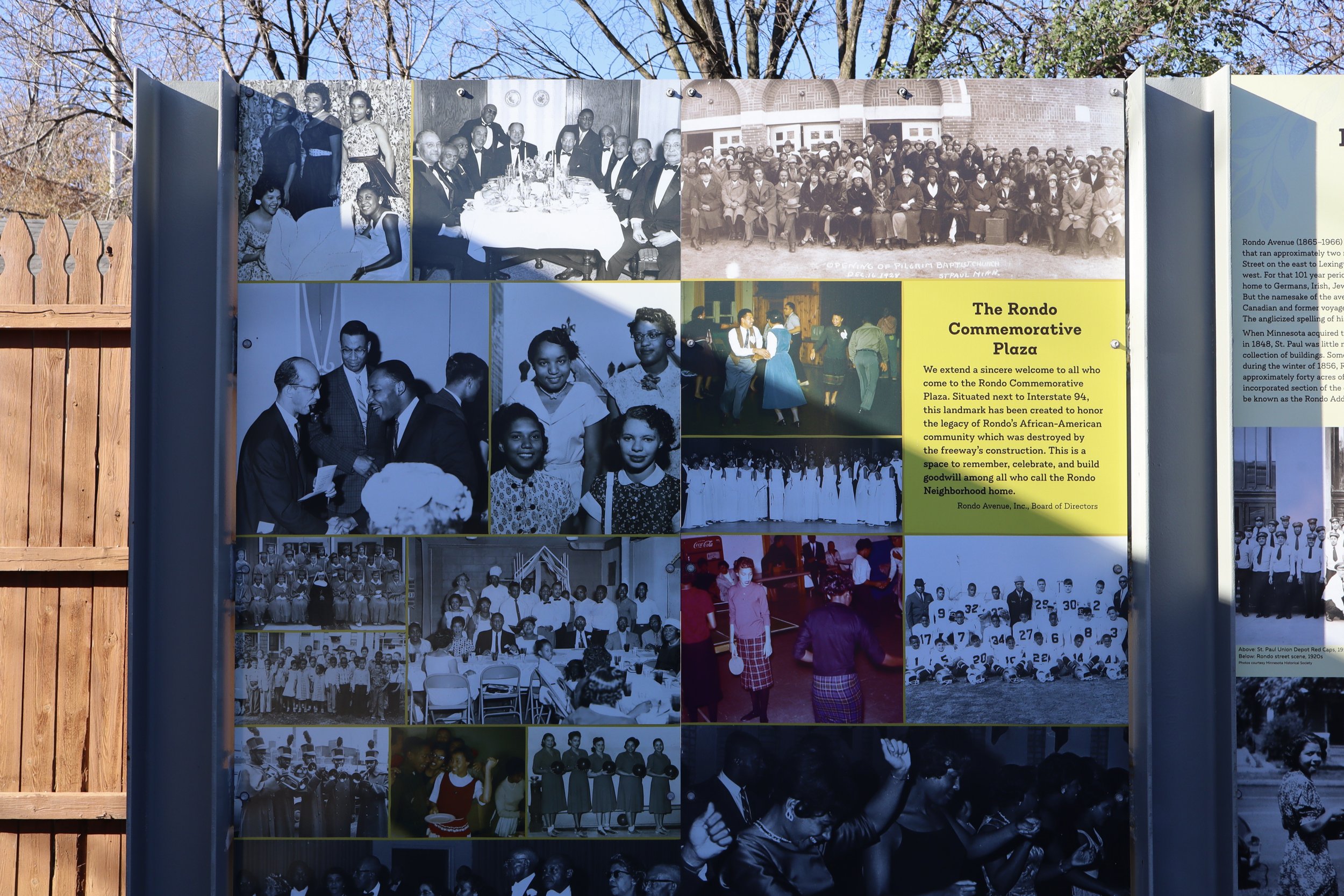
The introductory placard at the Rondo Commemorative Plaza
The Power of Storytelling

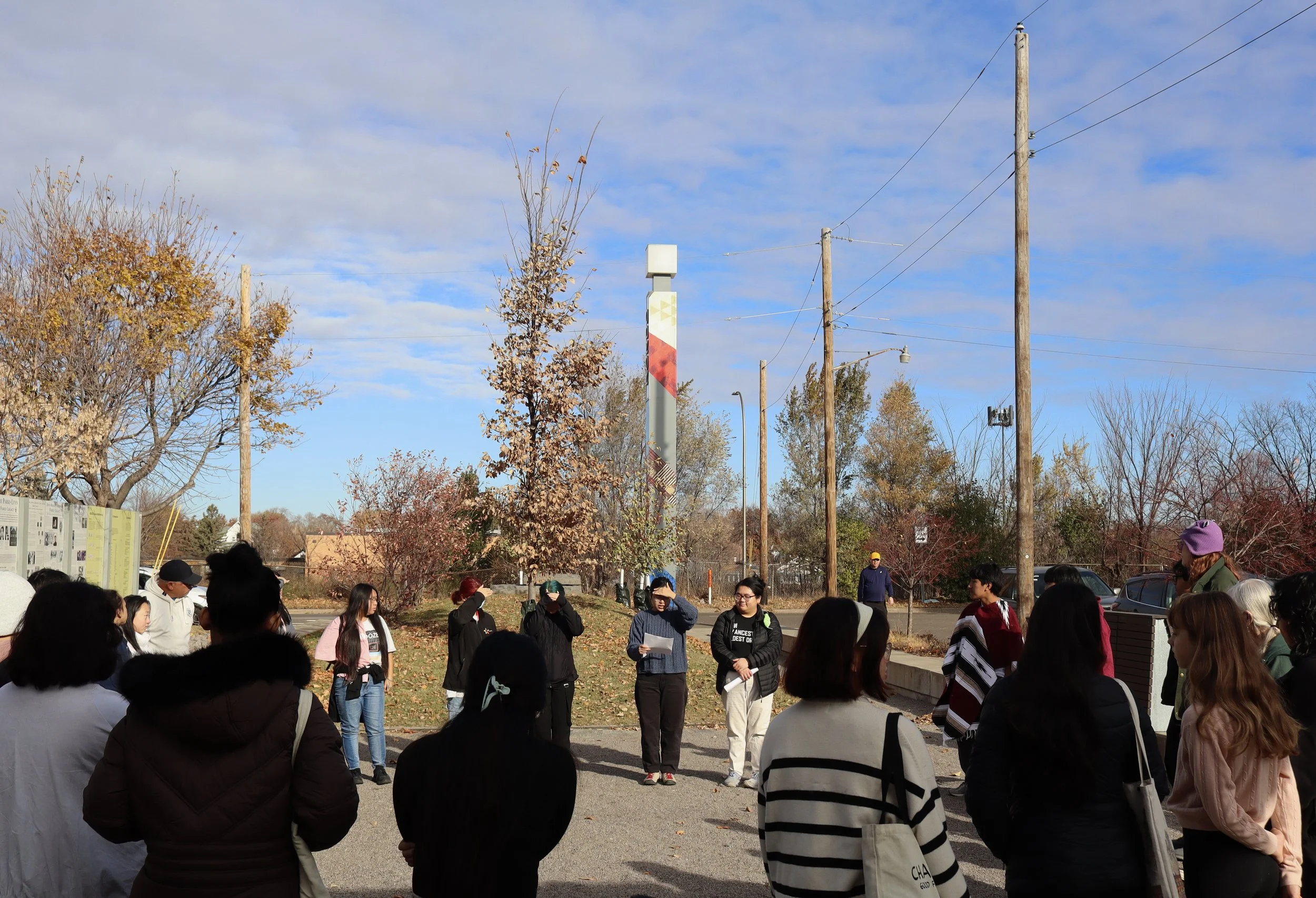
One of our youth participants leading a discussion about the informational placards.
As Damon pointed out to us, storytelling is a powerful tool for both help and harm: he pointed out that, right before Rondo was decided upon as the route for the highway, it was labelled as a “slum” despite being home to numerous families and robust businesses.
What connotations do people have with “slums”? What narrative is created when we label a place a “slum”? About the place? About the people there? And how does this narrative aid affect decision-making which can alter people’s very lives?
But storytelling can also be used to heal the wounds that destruction leaves behind. Today, Rondo continues to have an active and engaged community of local leaders and storytellers who work to keep their histories alive, celebrate these histories, and envision a future for their community that is just and equitable.
If you’re interested in learning more about the contemporary Rondo neighborhood, check out these resources!
Sharing Family Histories
After wrapping up our discussion about Rondo, we headed over to the Frogtown Community Center and had a wonderful meal from Mandalay Kitchen, a Burmese-Thai-fusion restaurant in Saint Paul.
Our first activity after lunch was creating maps which depicted our families’ journeys to Minnesota. In our maps, we incorporated imagery associated with the land, people, and culture of home countries, travel across space and time, our mothers and fathers, and where we’ve landed today. We talked about mountains, rivers, plants, clothing, and food. Then, our participants shared their stories with one another: what’s similar? What’s different? What can we learn from one another? From our families?
Our final activity for the day was a guest panel: YLI alumni, former staff, volunteers, and other community members came together to share their own personal and family histories with our youth cohort, illustrating the diverse range of experiences present in our Twin Cities.
✶ ✶ ✶
Our first Cultural Session was a wonderful opportunity for us to explore many questions: Where did we come from? And how did we get here? How is storytelling involved in these processes of movement and change? How can storytelling be used to heal? To harm? What can we learn from each other’s stories?
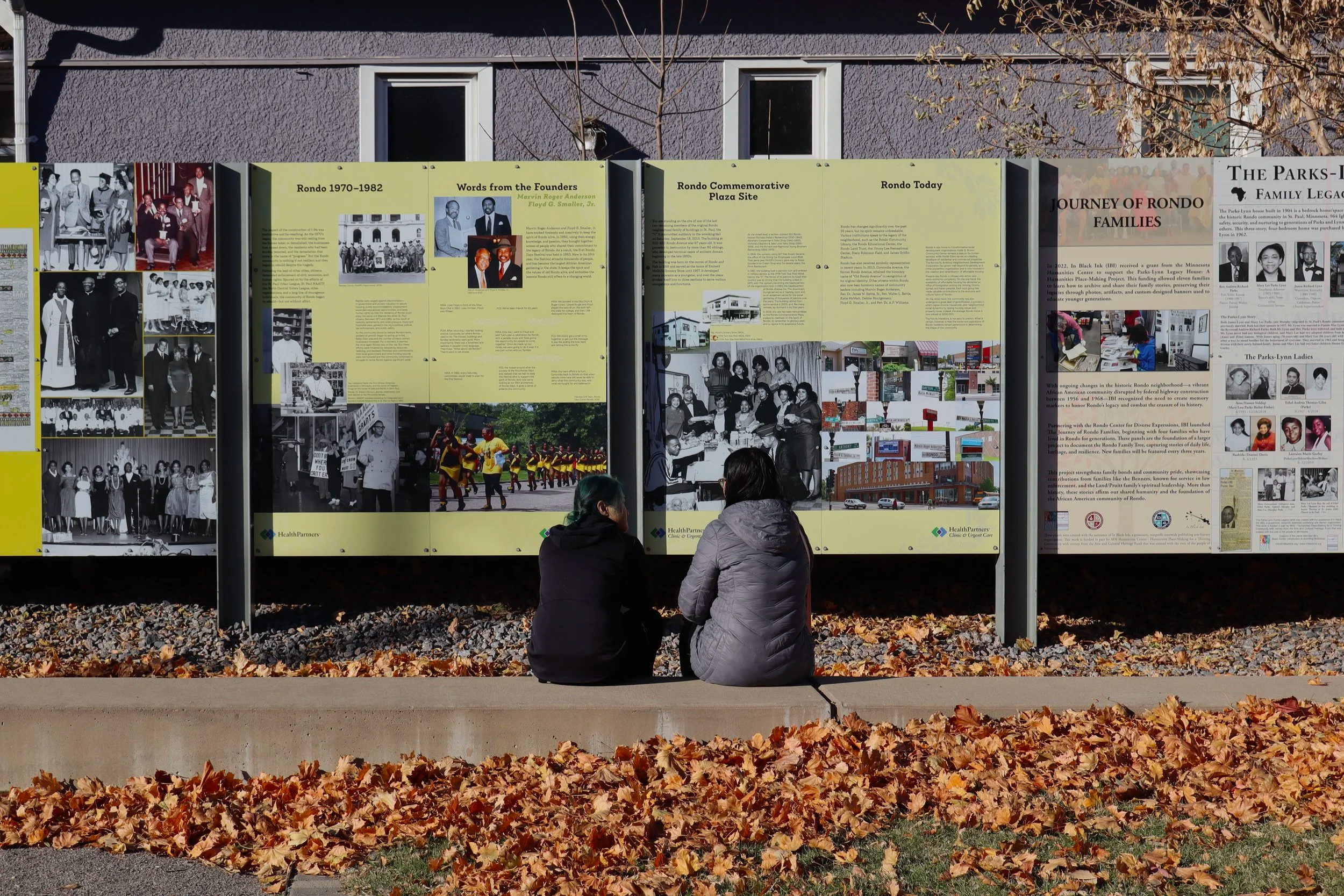
We can learn a great deal from one another by simply talking.